Getting Around Kyoto: Why the Bus Pass You Read About No Longer Exists
Updated September 17, 2026 · 6 min read
Kyoto is a grid in a basin, which makes it easy to read on a map and harder to cross than it looks. Most first-timers arrive with one piece of advice — buy the bus day pass — and it is out of date.
The pass that was abolished, and the one that replaced it
The ¥700 bus-only day pass went off sale at the end of September 2023 and stopped being accepted on 1 April 2024. That was deliberate policy, not a pricing tweak: the pass was so popular that bus queues made the network unusable for the people who live here, so the city removed it to push visitors onto the subway.
What exists now is the Subway & Bus One-Day Pass: ¥1,100 for an adult, ¥550 for a child. It covers all city bus routes including the sightseeing limited express, both subway lines, and parts of the Kyoto Bus, Keihan Bus and West Japan JR Bus networks — with some routes on each of those three excluded.
A single ride in the city bus flat-fare zone is ¥230 for an adult and ¥120 for a child, and fares outside the flat zone depend on where you boarded. So the arithmetic is simple: the pass pays for itself on the fifth adult ride. Four bus rides in a day is a normal Kyoto day. Five is a busy one.
There is a second benefit that goes unmentioned in most guides: the pass gets you a discount at over fifty temples, shrines and sights on presentation. With admissions rising this year, that is not a rounding error.
The subway is two lines, and that is the catch
Kyoto’s municipal subway has exactly two lines: Karasuma running north to south, Tōzai running east to west. They cross in the middle of the city and they are immune to traffic, which is the whole argument for them.
They also do not go to Kiyomizu-dera, Ginkaku-ji, Kinkaku-ji or Arashiyama.
That is the honest limit of the ¥1,100 pass. The four corners of Kyoto are reached by bus, by a separate railway, or on foot:
- Kiyomizu-dera and the Higashiyama lanes — bus, then a walk uphill. Or walk the whole eastern strip, which is the better plan.
- Kinkaku-ji and Ryōan-ji — bus. There is no rail alternative.
- Arashiyama — the JR Sagano line from Kyoto Station, or the Randen tram from the west of the centre. Neither is on the city pass; both are quicker than the bus.
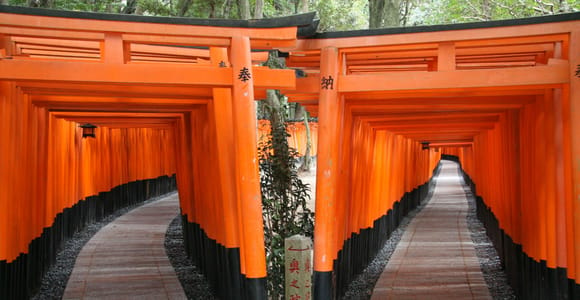
- Fushimi Inari — the JR Nara line, two stops out of Kyoto Station. Also not on the pass, and also the fastest way there.
If your day is Fushimi Inari in the morning and Arashiyama in the afternoon, the ¥1,100 pass is the wrong purchase — both are trains. If your day is Kinkaku-ji, Ryōan-ji and Nijō Castle, it is the right one.
IC cards are accepted on the buses and the subway, which is the no-thinking option: tap on, tap off, no pass to evaluate.
The sightseeing bus, and what its rating says
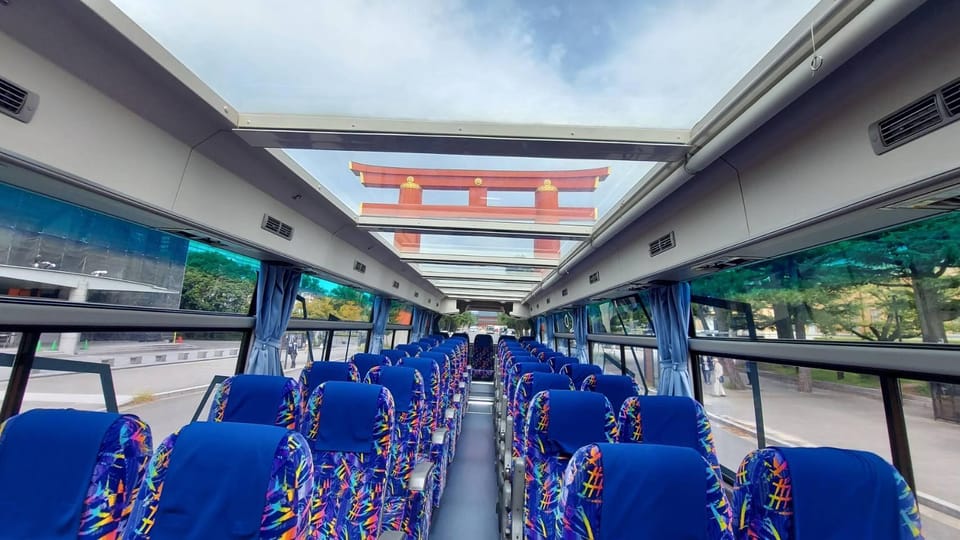
Our inventory holds a hop-on hop-off sightseeing bus ticket for one or two days at €24.02, with air conditioning — and 3.9 stars from 2,384 reviews.
That is the lowest rating of any popular product in our Kyoto inventory, and it is worth taking seriously rather than dismissing. Hop-on hop-off works in cities where the sights sit along one loop and traffic moves. Kyoto is the opposite: the sights are at the four edges of a basin, the roads between them are the congested ones, and a city bus ride costs ¥230.
It is still the right answer for some people — mobility limits, heavy rain, small children who will not walk, or a single day with no appetite for working out routes. Just book it knowing what two thousand reviewers think it is worth.
What actually works well here
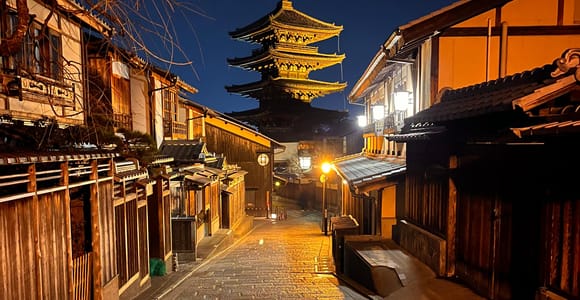
Walking. The eastern strip from Kiyomizu-dera through the Ninenzaka and Sannenzaka lanes to Yasaka Shrine and Gion is flat-ish, continuous, free and the best part of the city. The most-reviewed walking tours in our whole inventory are the ones through that district, at €18.90 and €20.11 with over 4,500 reviews each and 4.9 and 4.7 stars — across the whole inventory only a single full-day bus tour is ahead of them.
Bicycles. Kyoto is a grid and mostly level, which is why the bike tours rate so well: the morning bamboo forest ride is 3 hours 30 minutes at €94.97 with 4.9 stars from 167 reviews, and the e-bike round of Ginkaku-ji and the Philosopher’s Path is four hours at €64.11, also 4.9, from 93. Those are small numbers next to the thousands behind the Gion walks — the stars rest on a narrower base. Both are guided; the price is the guide, not the bicycle.
A rickshaw, for 45 minutes. The Arashiyama rickshaw run is €44.69 with a full 5.0 stars from 539 reviews. It is expensive per kilometre and it is not transport — it is the one way into parts of the bamboo grove that the crowds do not reach, with someone explaining them.
The short version
- Two or more bus rides and a subway hop: buy the ¥1,100 pass and use the temple discounts.
- A train day (Fushimi Inari, Arashiyama, Uji, Nara): do not buy it. Use an IC card.
- The eastern lanes: walk. Do not spend money crossing a district you should be crossing on foot.
- One day only, and tired: the sightseeing bus — with the 3.9 stars in mind.
Which corner of the city to aim at first is in what to see in Kyoto; the opening hours that decide the order are in temple hours and tickets. Guided rounds on foot, by bike, by rickshaw and by bus sit together on our guided tours of Kyoto page, and the trips out of the city are on day trips from Kyoto.
Fares and pass prices here are the city transport bureau’s own figures on the date at the top; tour prices and ratings are from our inventory and move.