A Kyoto Tea Ceremony: What €19 Buys, and What €49 Buys
Updated September 17, 2026 · 7 min read
Our Kyoto inventory holds 90 tea ceremony offers. The cheapest starts at €2.79, the median is €45.81, and the most expensive on this list is €100.56. That is a spread of more than thirty to one for something that, in every listing, is described as a tea ceremony.
The spread is real, and so is the confusion. What follows is what actually differs.
First, what none of them are
A formal tea gathering — a chaji — runs for hours, includes a meal, and is hosted for invited guests. Nothing sold to visitors by the hour is that, and anyone who tells you otherwise is selling something.
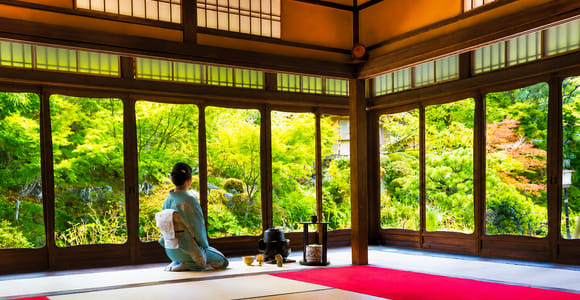
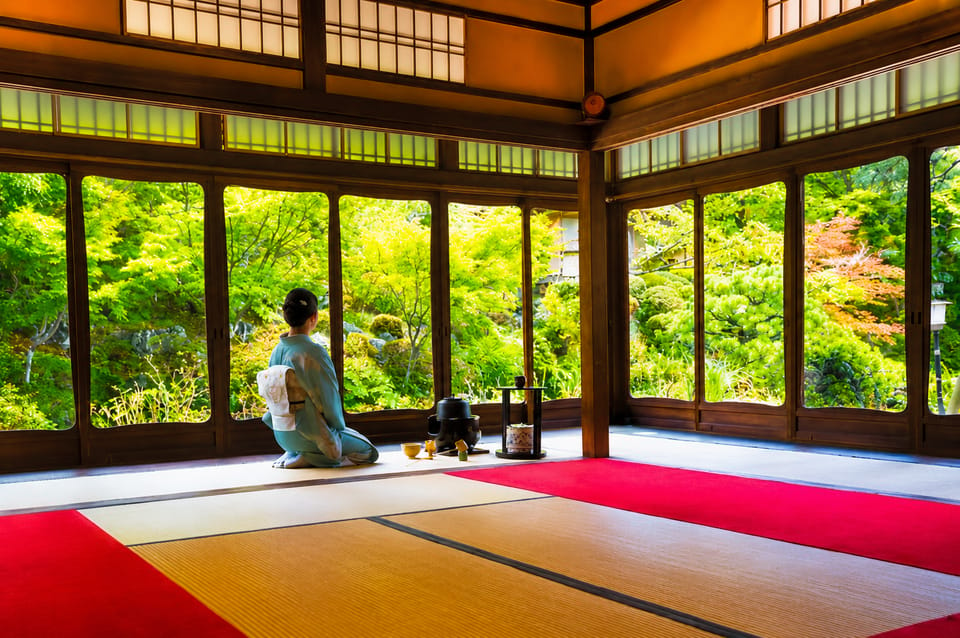
What is on offer instead is a demonstration you take part in: a host prepares matcha in a tea room, explains what is being done and why, and you drink a bowl of it with a sweet. Forty-five minutes to three hours. That is a genuinely good hour, and it is not an abbreviated chaji. It is its own thing.
The four variables that set the price
Where. A temple sub-hall, a century-old machiya townhouse, a garden tea house, a room in Gion. This is most of the price difference.
How long. From 45 minutes to three hours.
Whether you whisk your own bowl. Some are a demonstration; others put the bamboo whisk in your hand. The listings say which, and it is the single best predictor of whether people come out pleased.
Whether you sit on the floor. Most ceremonies are on tatami, in seiza — kneeling, heels under you. Forty-five minutes of that is genuinely uncomfortable if you are not used to it, and painful if your knees are not up to it.
What the popular ones actually are
| Price | Length | Setting | Reviews | |
|---|---|---|---|---|
| 45-minute lesson with an Urasenke tea master | €19.55 | 45 min | Tea room, English-speaking master | 4.3 · 2,516 |
| Machiya townhouse ceremony | €21.51 | 50 min – 3 h | 100-year-old townhouse | 4.8 · 890 |
| Matcha and sweets in Gion | €22.35 | 1 h | Gion | 4.8 · 658 |
| Ju-An at Jōtoku-ji | €25.14 | 1 h 10 min | Temple | 4.9 · 3,756 |
| Table-style in a machiya | €39.11 | 1 h 30 min | Townhouse, at a table | 4.9 · 1,333 |
| Kimono tea ceremony, Orizuruya Gion | €43.02 | 1 h 30 min | Gion, kimono included | 4.9 · 1,870 |
| Garden tea house near Kiyomizu-dera | €49.16 | 45 min | Tea house over a private garden | 4.8 · 4,406 |
| Zen experience in a temple | €100.56 | 2 h | Temple, with meditation | 4.9 · 539 |
Two things in that table are worth stopping on.
The price does not predict the rating. The cheapest of the popular offers is also the lowest rated — 4.3, against 4.8 and 4.9 for almost everything above it. It is a real tea lesson with a master from Urasenke, Japan’s largest tea school, and 2,516 people have reviewed it; it is not bad. But at €19.55 for 45 minutes it is the one where expectations and delivery diverge most often.
Twice the length for half the price is on the same list. Ju-An at Jōtoku-ji is 70 minutes at €25.14 with 4.9 stars from 3,756 reviews. The garden tea house near Kiyomizu-dera is 45 minutes at €49.16 with 4.8 stars from 4,406. The second is not worse value — you are paying for a tea house looking onto a private garden, five minutes from one of the busiest temples in the city, which is a real thing to buy. But if what you want is the ceremony and the explanation, the temple is longer, cheaper and rated higher.
If you cannot kneel, say so before you book
This is the practical point that most articles about tea ceremonies leave out.
A table-style ceremony exists. The machiya offer above is described by its operator as exactly that — the same ritual, done at a table, 90 minutes, 4.9 stars from 1,333 reviews. If kneeling on tatami for the length of a ceremony is not available to you, this is the phrase to search for: table-style, or chairs.
For everything else, ask the operator. Some tea rooms can provide a low stool or a cushion arrangement; some cannot, because the room is the size it is. What is in our listing is what the operator publishes, and no more — confirm your own case with them before you pay, and do it in writing.
Related: the Ju-An ceremony’s own listing states that it is not suitable for children under five. That is the operator’s note about a quiet room and a 70-minute ritual, not a rule of the city — but it tells you what kind of hour it is.
A different thing worth knowing about
If the appeal is the tea rather than the ritual, the tea itself comes from Uji, south of the city on the JR Nara Line — the same line as Fushimi Inari and Nara. The tea museum with matcha grinding is an hour, €20.11, 4.9 stars from 1,034 reviews, and you grind your own leaf into powder on a stone mill. It is not a ceremony and does not pretend to be. It also folds neatly into a Nara day — see Kansai from Kyoto.
Which one, for whom
- One hour, want the explanation. The temple ceremony at €25.14. At 70 minutes it runs longer than the 45-minute formats above and below it in price, and its 4.9 stars tie the highest on this list.
- One free afternoon and a camera. The garden tea house at €49.16. You are buying the room and the garden as much as the tea.
- Already renting a kimono. The combined Gion offer at €43.02 saves you a changing appointment — but not necessarily money: kimono rental starts at €12.29 in our kimono listings and the cheapest ceremonies are around €20, so check the arithmetic for your pair.
- Knees, hips, or a bad back. Table-style, €39.11 — and ask first.
- Came for the Zen, not the tea. The two-hour temple version at €100.56, which is a meditation session with tea in it rather than the reverse.
- Travelling with small children. Consider a 45-minute format rather than 90 minutes, and read the age note on the listing rather than assuming.
All ninety offers sit on our Kyoto tea ceremony page; the hands-on versions — calligraphy, kintsugi, pottery — are on the workshops and classes page. Where a tea house fits into a first visit is in what to see in Kyoto.
Prices, durations and review counts are from our inventory on the date at the top and change. Age limits, seating and what is included are the operator’s to state — the booking page is the source, not this article.